Curved Dry Stone Dyke — Near Carnoustie
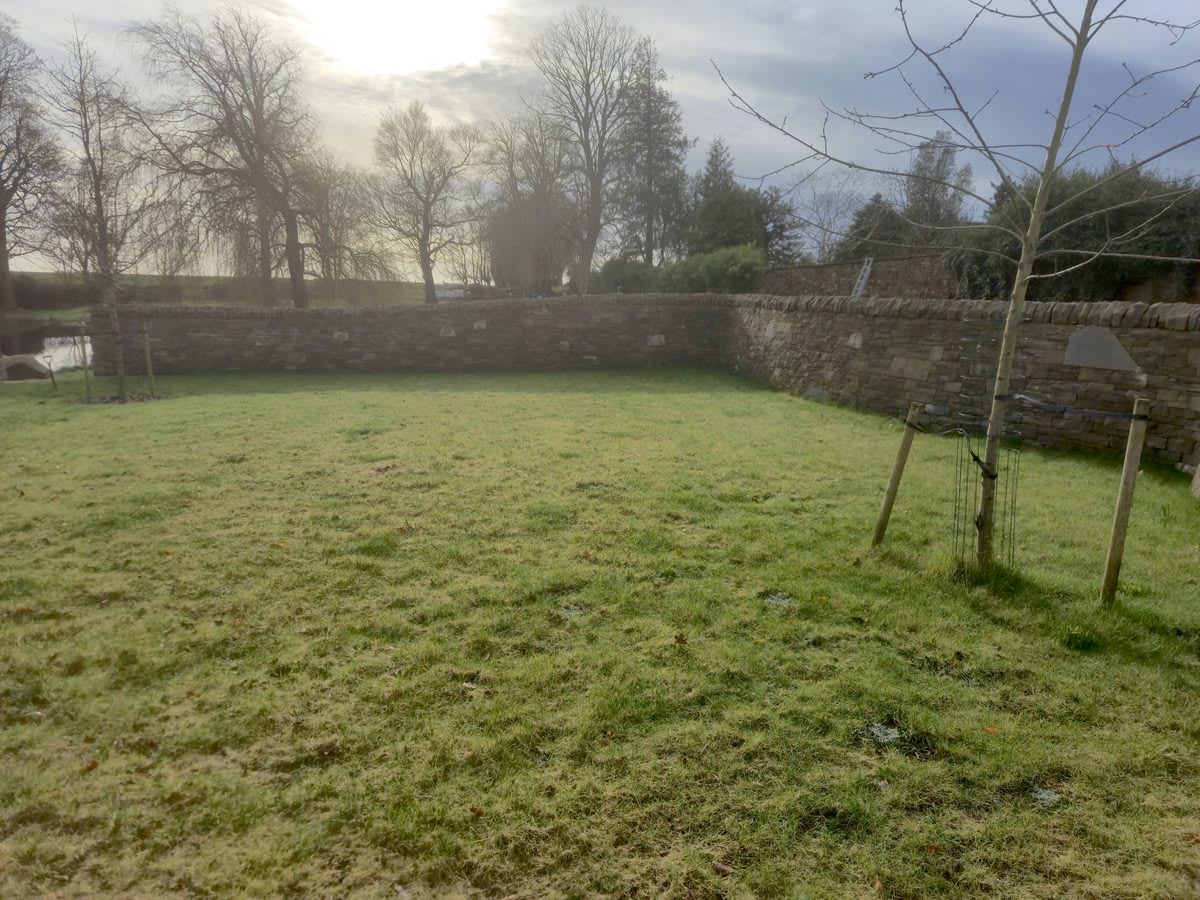
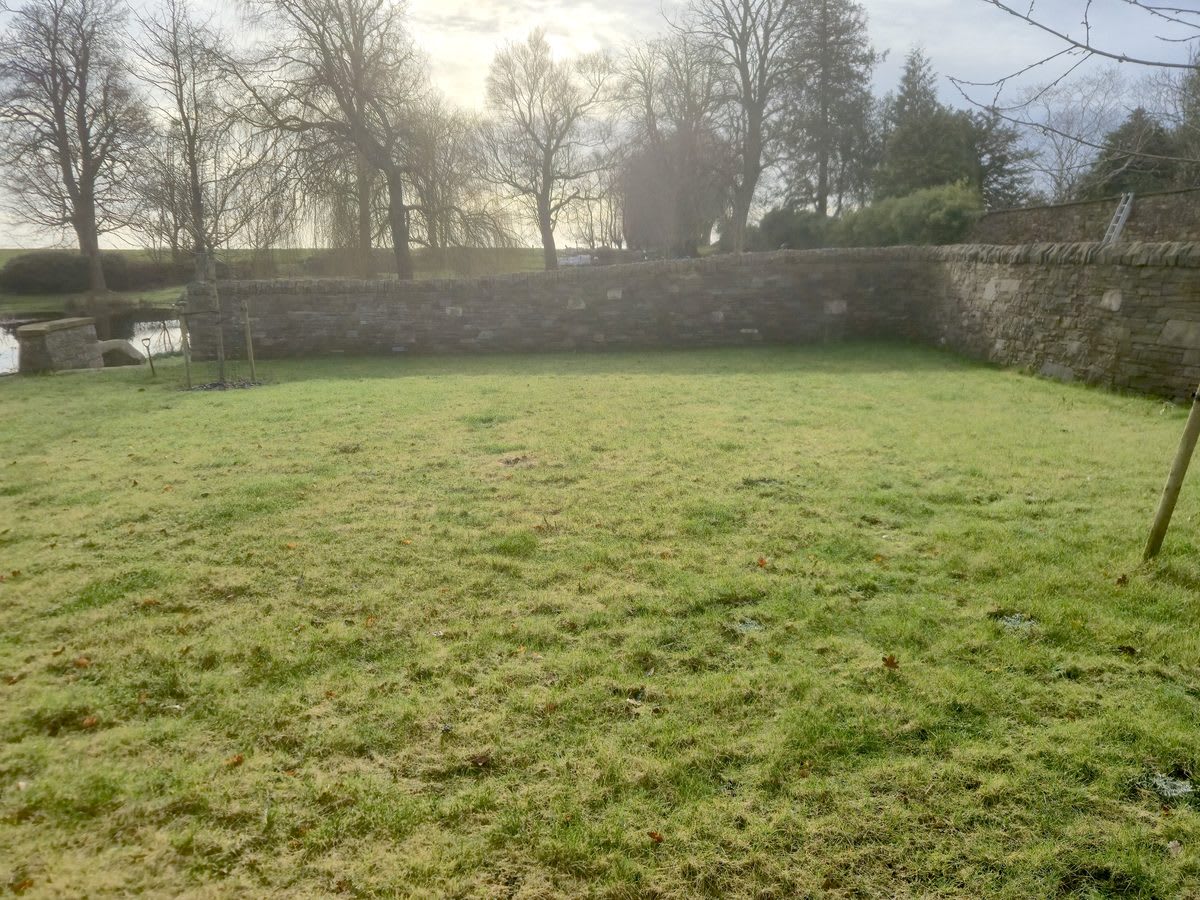
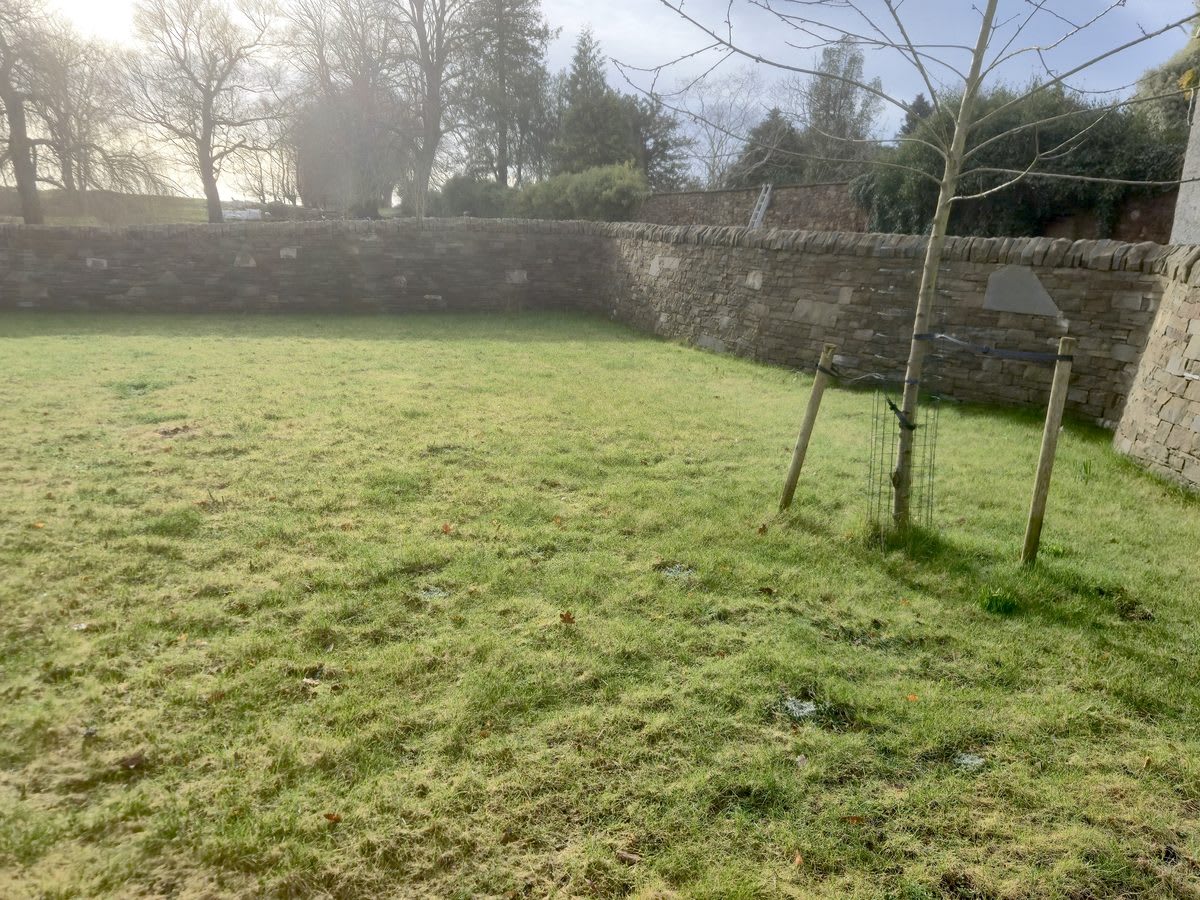
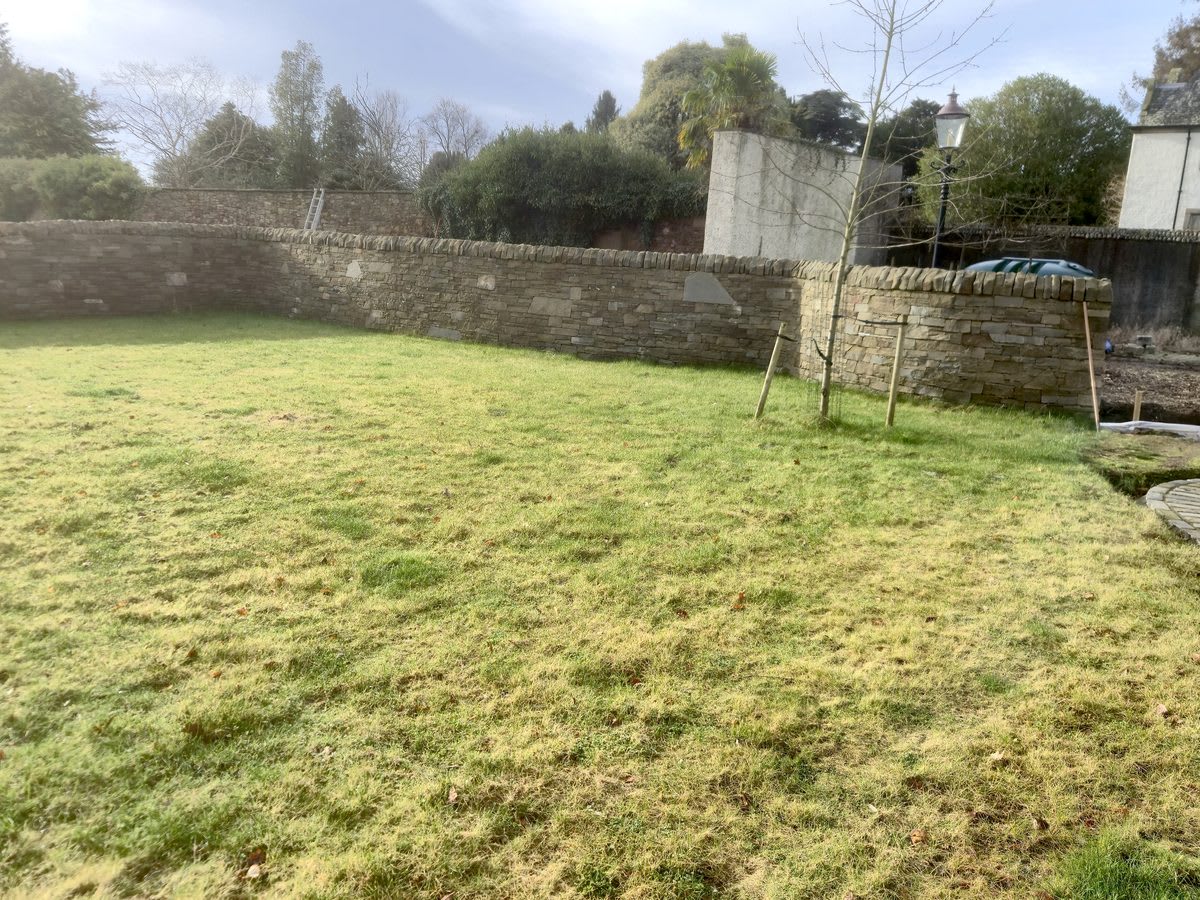
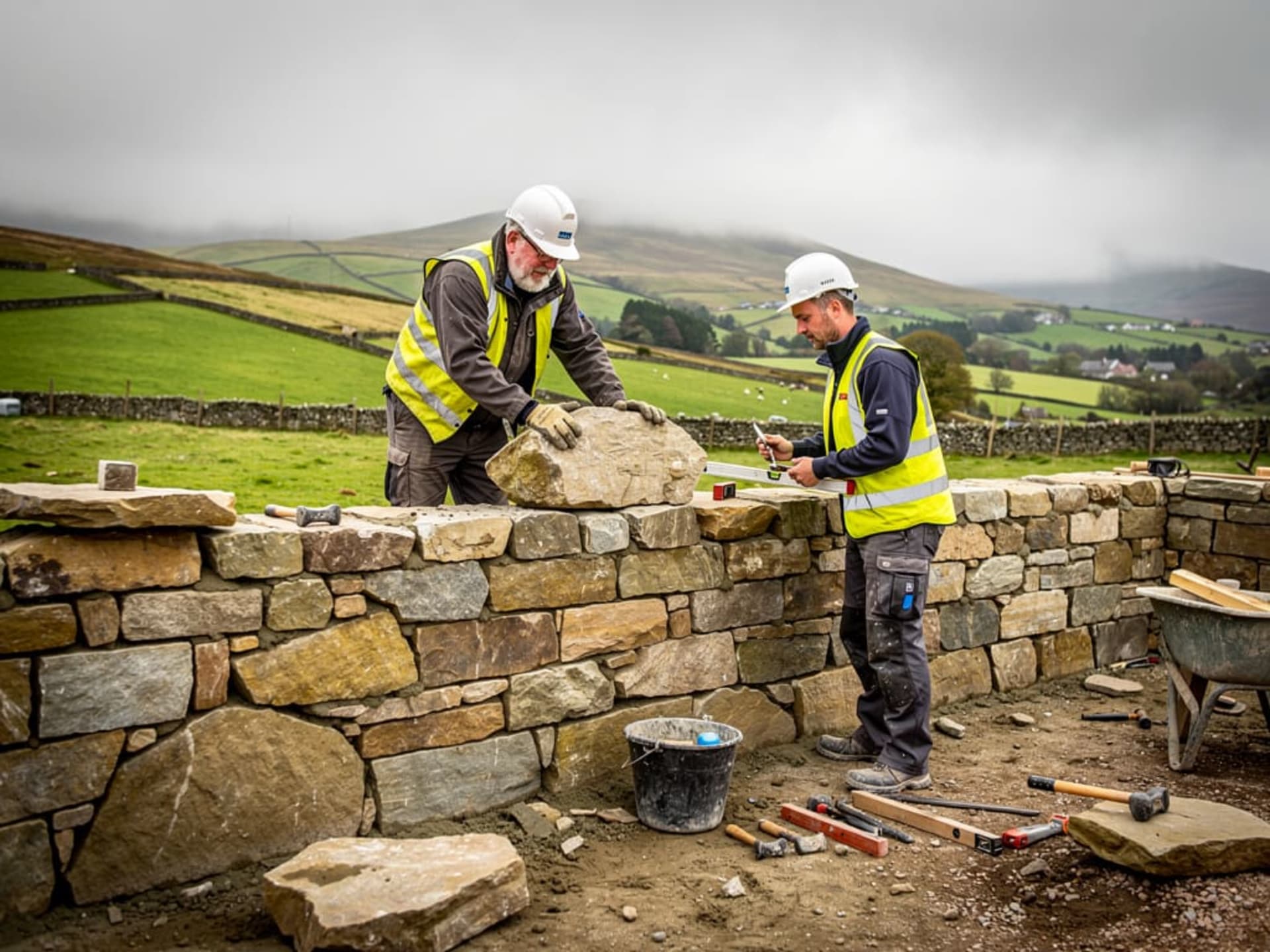
A new dry stone dyke near Carnoustie, built on a curve and laid with new dyke stone from Denfind Stone in Monikie. Every stone in this wall was cut precisely to size before it went down. There’s no other way to build a curved dyke properly.
The Brief
The wall follows a curve. That single fact decides almost everything about how the job has to be built. A straight dyke can take stones broadly as they come, working with the natural shape of each piece. A curved dyke can’t. Every course has to bend by a few degrees, and every stone has to do its share of that bending.
The brief was to build a dyke that holds the curve cleanly, sits stable across its full length, and looks like a single continuous piece of stonework rather than a series of compromises stitched together.
Working With New Dyke Stone
The stone for this build came from Denfind Stone, based in Monikie. Locally quarried, sized and graded for dyke building. New stone gives you a consistency that reclaimed material can’t — every piece arrives broadly square, broadly the right thickness, with predictable working faces.
The trade-off is that new stone has to be earned. Reclaimed stone carries its own character; new stone has to be built into character. The skill is in the laying — the way each stone is set, how the courses are broken, how the through-stones are placed — not in the material doing the work for you.
The Cuts
Every stone in this wall was cut to size before it was laid.
On a curve, that’s not optional. The radius pulls every course into a slight wedge — wider at the back face than the front, or wider at the front than the back, depending on which side of the curve you’re working. If a stone arrives roughly square and you lay it as it comes, the joints open up, the wall starts to lean, and the curve looks ragged from any angle.
Cutting back to face size and depth, stone by stone, is slow work. It also means every stone earns its place. By the time it’s laid, the dyke reads as one continuous wall — not a sequence of best-fits.
The Result
A curved dyke, built clean from end to end, set in new Denfind stone with every stone cut to fit.
That’s the standard we hold ourselves to on every dyke we build, curved or straight. Dykes are meant to last for generations. The work behind that — the cuts, the bedding, the through-stones, the patience — is the work that determines whether they actually do.