Indian Sandstone Patio — Dundee
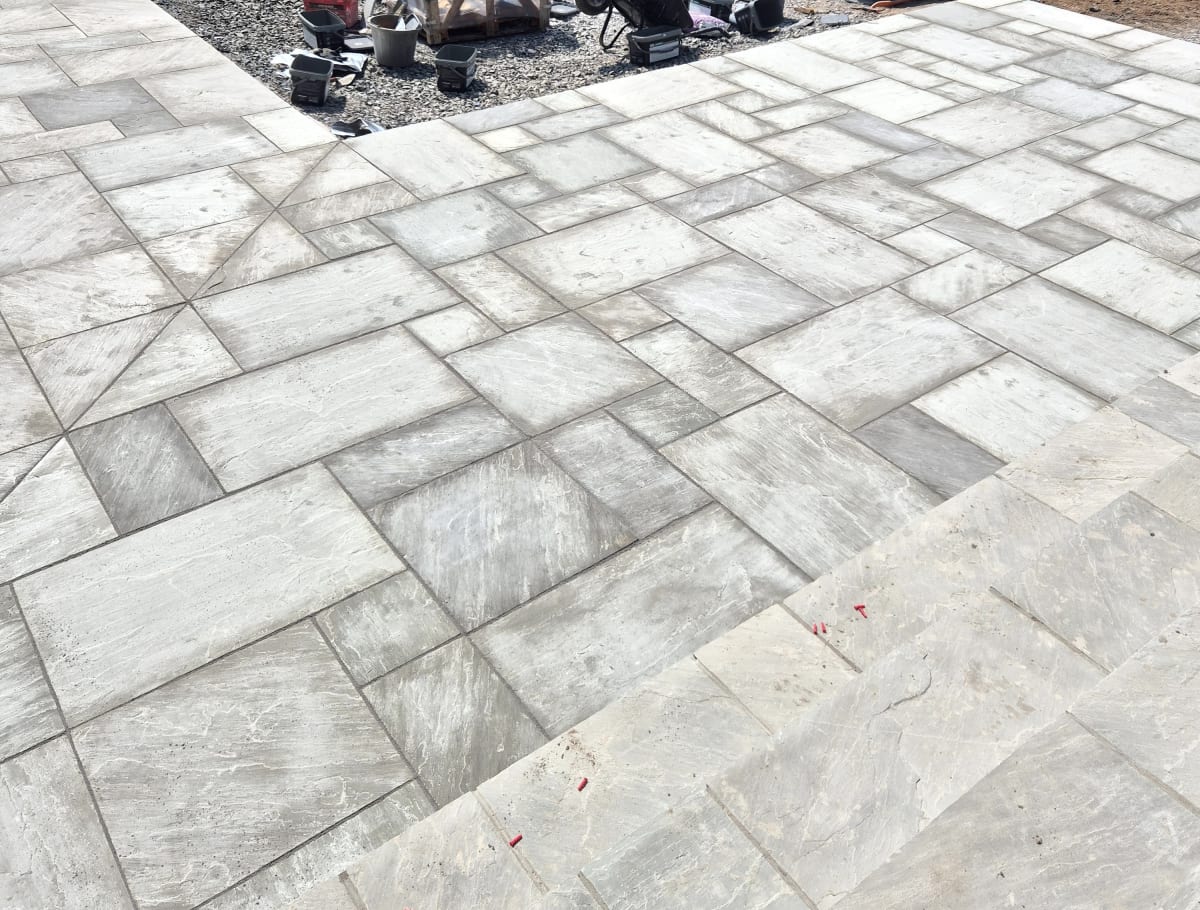
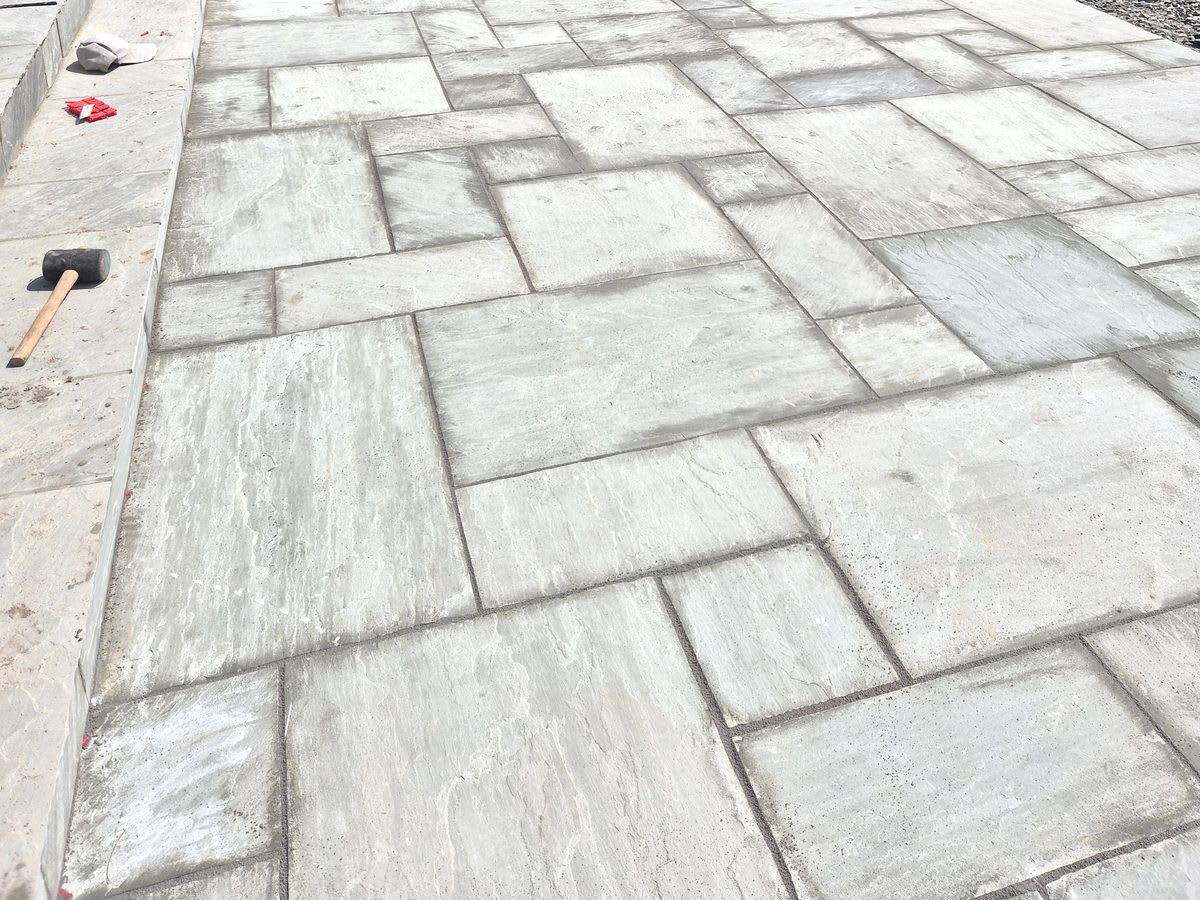
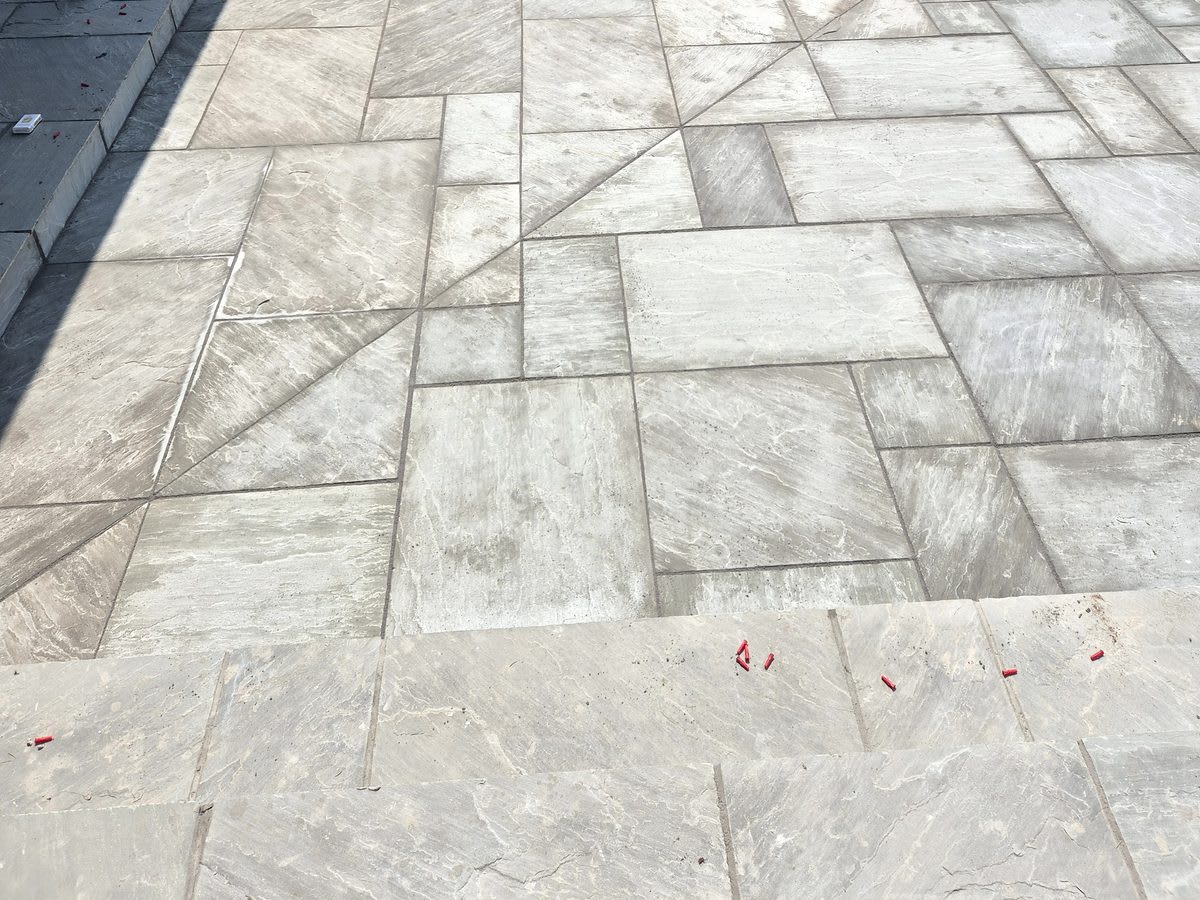
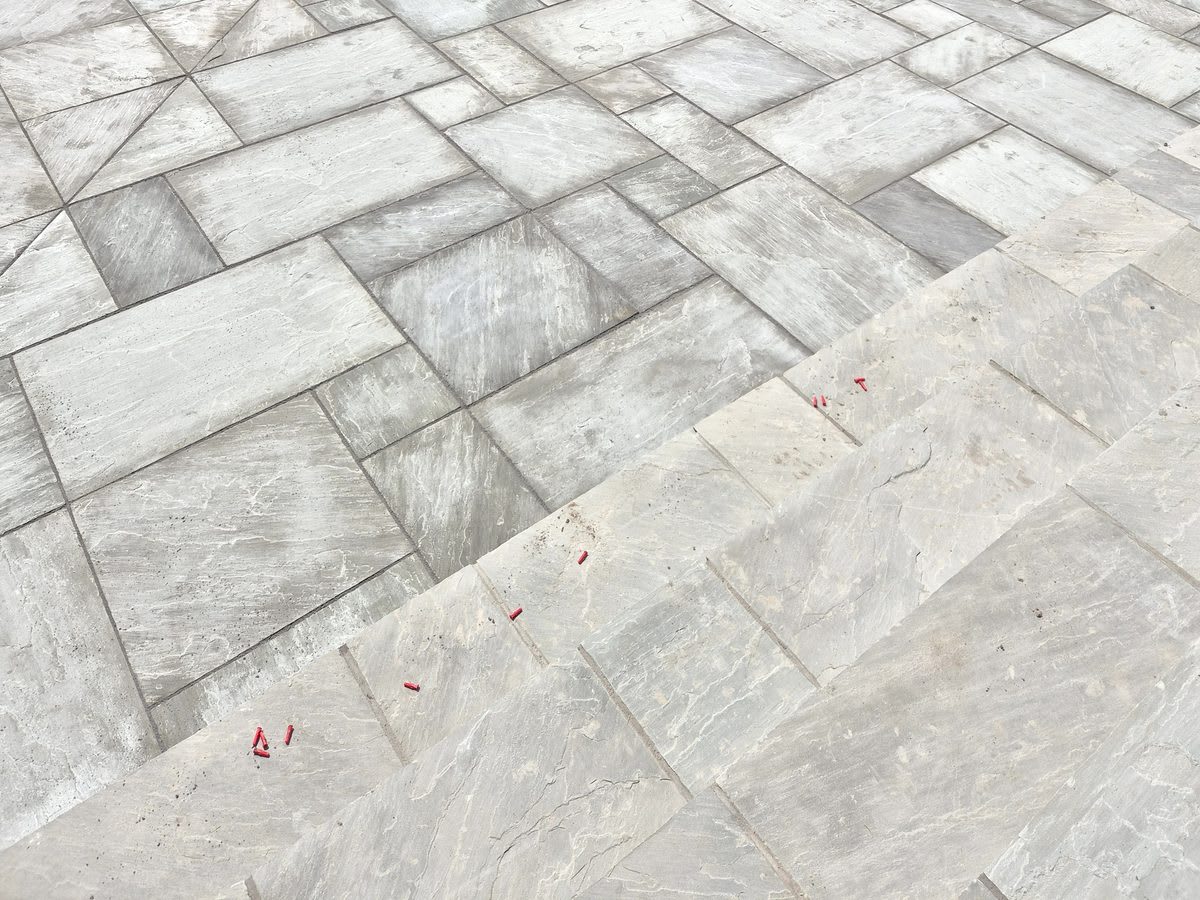
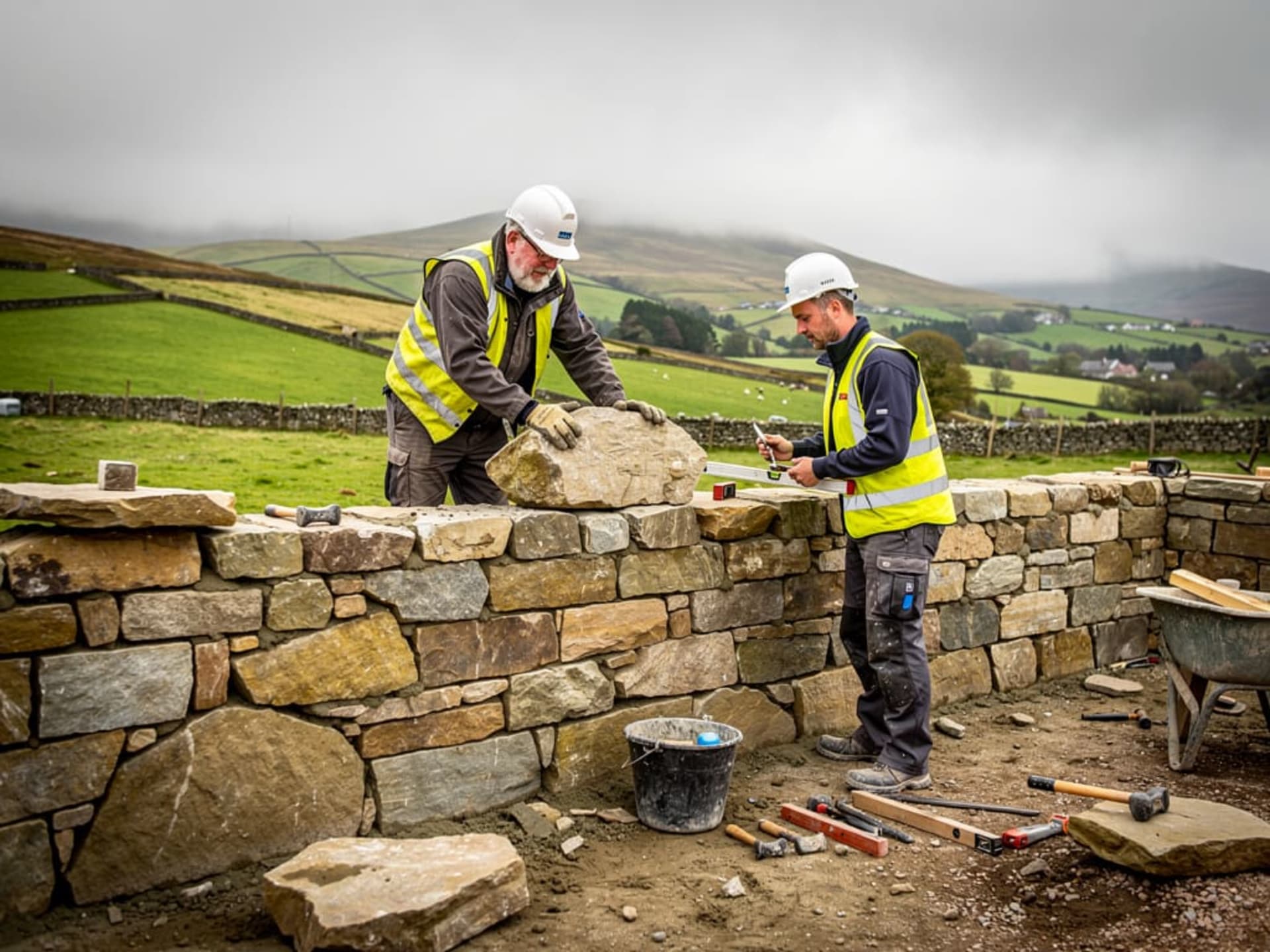
A 65-square-metre Indian sandstone patio, laid in Dundee. Natural stone, hand-cut to fit, set on a proper bed and pointed for the long term. The kind of patio that still looks the part in twenty years.
The Brief
The job was a single substantial patio area — around 65 square metres of Indian sandstone slabs, laid as a finished outdoor surface for a residential property in Dundee. Mixed slab sizes for a natural, irregular pattern. Clean lines at the boundaries. A patio that reads as part of the property, not as something dropped on top of it.
Working With Indian Sandstone
Indian sandstone is one of the most-used natural paving stones in the UK for good reason. It’s hard, it’s frost-stable, it weathers well in Scottish conditions, and it carries a colour and texture variation that machine-made paving slabs can’t match.
The trade-off — and there’s always a trade-off with natural stone — is that no two slabs are quite the same. Thickness varies. Square corners aren’t always quite square. Edge profiles need to be checked and sometimes trimmed. The pattern has to be planned across the whole area, not laid one slab at a time, or the joints stop lining up and the eye starts catching errors.
The Build
A patio is only as good as what’s under it.
The base goes in first — a properly compacted sub-base with the right falls so water moves the way it needs to move, not pooling in the middle of the patio. Then a full mortar bed, slab by slab, levelled and tapped down so each slab sits true to its neighbours.
Joints get pointed once the slabs have set. On a 65-square-metre patio, that’s a substantial amount of jointing — and the consistency of it is what tells you whether the job was done by someone who knew what they were doing. Even gaps. Even depth. Even colour. No patching, no rushed corners.
The Result
A patio that’s level, flush, and ready to be lived on.
Indian sandstone darkens slightly when it’s wet, lightens again when it’s dry, and softens in tone over the first season as it settles into its surroundings. By the time the first summer comes around, the patio doesn’t look new — it looks like it belongs.